
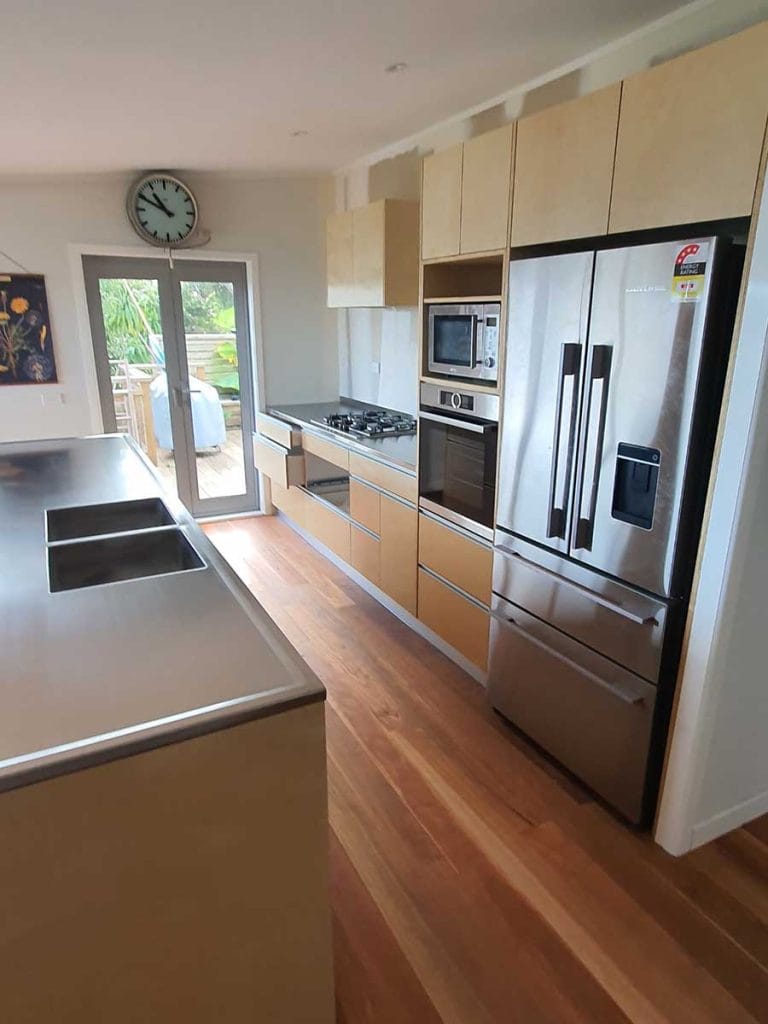
When building or renovating in New Zealand, one of the first material decisions homeowners and builders face is surprisingly simple:
What type of plywood should you use?
Whether you’re designing a modern kitchen, installing cabinetry, or planning a full interior fit-out, the debate between melamine plywood vs standard plywood appears in almost every project discussion.
Both materials are widely used across New Zealand construction, cabinetry, and furniture making. However, each serves a different purpose depending on the project requirements.
Choosing the wrong material can lead to:
- unnecessary finishing costs
- longer installation times
- Reduced durability in high-use areas
Choosing the right plywood, on the other hand, can simplify installation, improve durability, and enhance the final look of your project.
This practical guide explains the real differences between melamine plywood and standard plywood, where each material works best, and how professionals across NZ use them in projects ranging from plywood kitchen cabinets to custom CNC-cut cabinetry systems.
If you’re exploring cabinetry materials, plywood options, and precision cutting services available locally, you can also read the full guide from Ultimate Building Supplies:
Key Takeaways: Melamine Plywood vs Standard Plywood
What is melamine plywood?
Melamine plywood is plywood coated with a melamine resin surface that creates a smooth, durable finish. It is commonly used for cabinetry, shelving, wardrobes, and furniture.
What is standard plywood used for?
Standard plywood is unfinished layered wood typically used for structural building, furniture frames, and projects that require custom finishing.
Which plywood is best for kitchen cabinets?
Melamine plywood is often preferred for plywood kitchen cabinets because it provides a clean, wipeable surface without additional painting or sealing.
Is melamine plywood stronger than standard plywood?
Structurally, both materials can have similar strength because they share the same plywood core. The key difference lies in the surface finish and moisture resistance.
When should standard plywood be used instead?
Standard plywood is ideal when builders want to paint, stain, or customise the surface finish.
Understanding Plywood in New Zealand Construction
Plywood remains one of the most versatile building materials used across New Zealand.
Builders rely on plywood for a wide range of applications, including:
- structural wall and floor systems
- cabinetry and joinery
- shelving and storage units
- furniture manufacturing
- interior fit-outs and renovation projects
The strength of plywood comes from its cross-laminated construction. Thin layers of timber veneer are glued together with alternating grain directions, which increases structural stability and reduces warping.
In most NZ building projects, plywood typically falls into two main categories:
Standard plywood
and
Melamine-coated plywood
Although both share a similar core structure, the surface finish dramatically changes how each material performs in practical use.
What Is Melamine Plywood?
Melamine plywood is standard plywood that has been laminated with a melamine resin surface layer.
This coating creates a smooth, durable finish that is ready to use immediately without painting or staining.
Melamine surfaces are typically available in:
- white finishes
- woodgrain textures
- neutral cabinet colours
Because of its clean appearance and easy maintenance, melamine plywood is widely used for:
- plywood kitchen cabinets in NZ
- wardrobes
- shelving systems
- office cabinetry
- storage solutions
- flat pack furniture
For homeowners planning a plywood kitchen NZ, melamine panels significantly simplify the installation process.
Instead of sanding, sealing, and painting raw wood, cabinetmakers can simply cut and assemble the panels, saving time and labour.
What Is Standard Plywood?
Standard plywood refers to unfinished plywood sheets that retain the natural timber surface.
This type of plywood is extremely versatile and widely used for construction and woodworking.
Common uses include:
- structural framing
- flooring substrates
- wall linings
- furniture frames
- custom woodworking projects
Unlike melamine plywood, standard plywood usually requires additional finishing, such as:
- painting
- staining
- sealing
- laminating
Builders often choose standard plywood when they want complete control over the final appearance.
For example, a cabinetmaker may stain plywood to highlight the natural timber grain, creating a more traditional or handcrafted aesthetic.
Key Differences Between Melamine Plywood and Standard Plywood
Understanding the core differences between these two materials can help homeowners and builders make better decisions for each project.
Surface Finish
Melamine plywood arrives pre-finished with a smooth laminate surface, ready for installation.
Standard plywood has a natural timber surface that usually requires sanding, sealing, or painting.
This difference alone can significantly affect labour costs during construction.
Maintenance Requirements
Melamine surfaces are easy to clean and resistant to stains, making them ideal for kitchens and storage areas.
Standard plywood requires proper sealing or finishing to prevent moisture damage.
In environments where spills and humidity are common, melamine surfaces often perform better.
Installation Speed
Melamine plywood reduces finishing time because it arrives ready to install.
Standard plywood requires additional finishing work before it can be used in visible applications.
Builders producing flat-pack plywood kitchen cabinets in NZ often prefer melamine panels because they streamline the assembly process.
Customisation Options
Standard plywood offers greater flexibility for custom finishes.
Builders can:
- Stain the wood
- paint it
- apply specialty coatings
Melamine plywood, on the other hand, provides a consistent factory finish but fewer customisation options.
Durability for Daily Use
Melamine surfaces are designed to resist:
- scratches
- stains
- moisture
Because of this durability, melamine panels dominate modern cabinetry and storage systems throughout New Zealand homes.
Why Melamine Plywood Is Popular for Kitchen Cabinets in NZ
Many homeowners across New Zealand are choosing melamine plywood for kitchen installations.
A typical plywood kitchen installation may include:
- cabinet carcasses
- drawer systems
- pantry storage
- shelving units
- wardrobe cabinets
Melamine plywood offers several advantages for these environments.
Easy Cleaning
Kitchen cabinets are constantly exposed to:
- cooking oils
- food splashes
- moisture
Melamine surfaces can be wiped clean quickly, making them ideal for busy households.
Modern Appearance
Melamine panels provide a smooth and uniform finish, which suits modern kitchen designs that prioritise minimalism and practicality.
For homeowners installing plywood kitchen cabinets in NZ, this clean aesthetic is often a major advantage.
Cost Efficiency
Melamine plywood reduces labour costs because it eliminates the need for finishing work.
In projects involving flat pack plywood kitchen cabinets NZ, this can significantly reduce overall installation time.
When Standard Plywood Is the Better Choice
Despite the popularity of melamine panels, standard plywood still plays a vital role in construction and custom woodworking.
Builders often choose standard plywood when they need:
- structural strength
- flexibility for finishing
- natural timber aesthetics
Common applications include:
- structural framing
- flooring substrates
- hidden cabinet structures
- custom furniture projects
- decorative woodwork
Designers creating handcrafted cabinetry may also prefer natural plywood surfaces because they showcase the organic character of timber.
The Role of CNC Cutting in Modern Cabinetry
Modern cabinetry production in New Zealand increasingly relies on precision CNC cutting technology.
Using CNC cutting services, builders can produce highly accurate panels and joinery components with minimal material waste.
Professional services such as:
- CNC cutting Auckland
- plywood cutting service
- Wood cutting service Auckland
- CNC wood cutting
allow cabinetmakers and builders to fabricate precise components quickly.
Computer-controlled plywood cutter machines can produce complex shapes and cabinet parts with exceptional accuracy.
This technology is particularly valuable for:
- kitchen cabinetry
- cabinet carcasses
- shelving systems
- wardrobe installations
- flat-pack furniture
If you want to explore precision fabrication services, see:
Real-World Insight from the Ultimate Building Supplies Team
The team at Ultimate Building Supplies has worked with builders, cabinetmakers, and homeowners throughout Auckland on cabinetry and interior fit-out projects.
One project consultant shared an interesting example during a recent kitchen renovation.
A homeowner originally planned to use raw plywood panels for their kitchen cabinetry. After reviewing the finishing requirements and long-term maintenance, they decided to switch to melamine panels instead.
The consultant explained:
“Many customers initially choose standard plywood, but once they understand the time and labour required to finish cabinets properly, melamine becomes the more practical option.”
This shift reflects a broader trend across New Zealand kitchen renovations, where homeowners increasingly prefer materials that combine durability, convenience, and modern design.
Choosing the Right Plywood for Your Project
Selecting the right plywood depends on how the material will be used within your project.
Consider these questions before choosing:
- Will the plywood surface be visible or hidden?
- Does the project require a finished appearance immediately?
- Will the material be exposed to moisture or spills?
- Do you want the option to stain or paint the surface?
If the goal is quick installation with a clean, finished appearance, melamine plywood is often the better choice.
If you require custom finishes or structural performance, standard plywood may be the more appropriate option.
Frequently Asked Questions About Melamine Plywood
Is melamine plywood waterproof?
Melamine surfaces resist moisture, but the plywood core can still absorb water if exposed edges are not properly sealed.
Is melamine plywood good for kitchen cabinets?
Yes. Melamine plywood is widely used for plywood kitchen cabinets in NZ because it provides durability, easy cleaning, and a consistent finish.
Can melamine plywood be cut easily?
Yes, but cutting melamine panels requires precision tools to prevent edge chipping. Many builders use CNC cutting services for cleaner results.
Is melamine plywood more expensive than standard plywood?
Material costs can be slightly higher, but the savings in labour and finishing often balance the difference.
Where can I get plywood cut to size in Auckland?
Builders and homeowners can use professional plywood cutting service providers offering CNC cutting Auckland for accurate custom panels.
Final Thoughts: Which Plywood Should You Choose?
Both melamine plywood and standard plywood play important roles in modern construction and cabinetry.
Melamine panels excel in applications where:
- clean finishes are essential
- Easy maintenance is important
- Installation speed matters
Standard plywood remains valuable when builders require:
- structural performance
- custom finishing options
- natural timber aesthetics
For many modern kitchens and cabinetry projects across New Zealand, melamine plywood has become the practical choice.
Learn More: Premium Plywood and CNC Cutting in Auckland
If you’re planning a kitchen renovation, cabinetry installation, or custom build, explore these helpful resources from Ultimate Building Supplies.
Premium Plywood and Building Materials
Custom Plywood Kitchens
Precision CNC Cutting Services
These guides explain:
- How to design a plywood kitchen in NZ
- How to choose the best cabinetry materials
- How CNC cutting services streamline cabinet production
- How builders create high-quality cabinetry using precision-cut panels
The right combination of materials, design, and precision cutting can dramatically improve the quality and longevity of any kitchen or cabinetry project.